 EN
EN

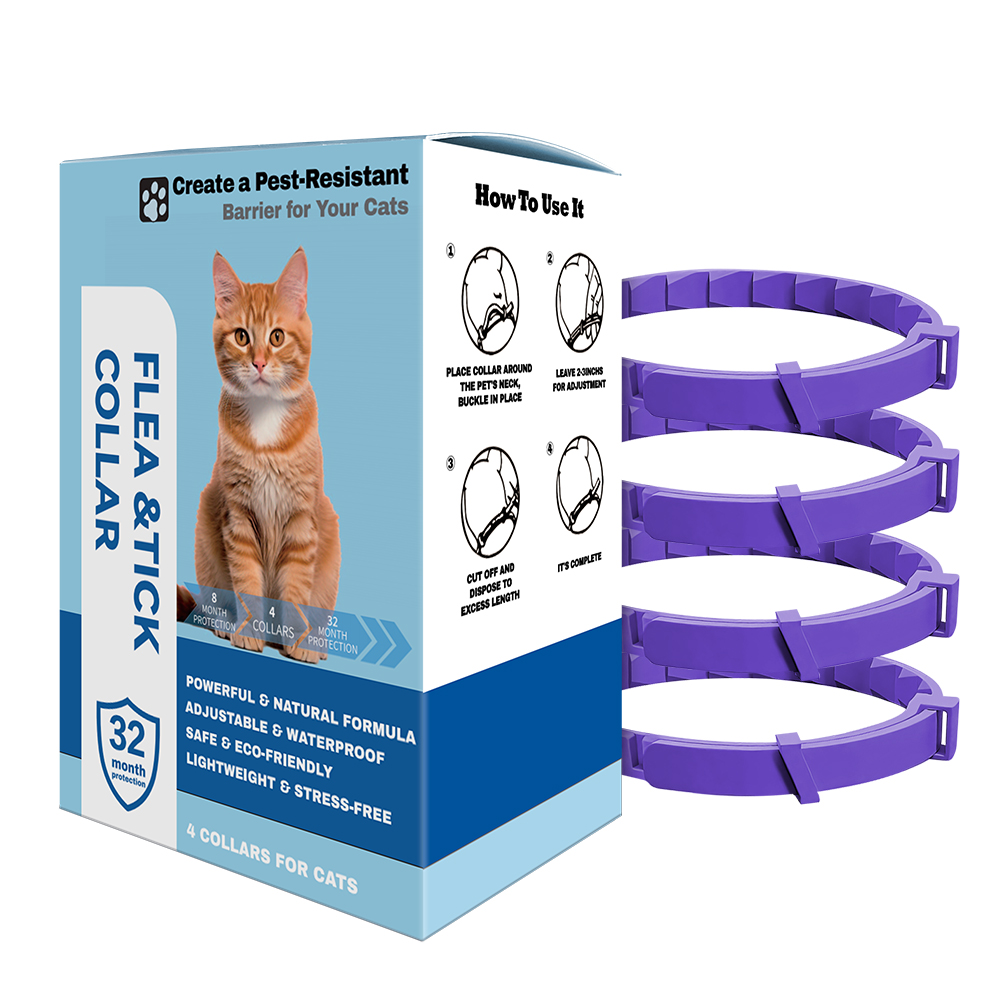
How Flea and Tick Collars Work for Long-Lasting, Season-Long Protection
Flea and tick collars offer ongoing protection because they slowly release chemicals such as imidacloprid and flumethrin over time. These collars work by spreading the pesticide throughout the animal's fur from the neck area all the way back to their hind legs for around eight months according to a recent report from the Companion Animal Parasite Council in 2024. When parasites come into contact with treated areas, they die without needing to be absorbed into the bloodstream or processed through the liver like what happens when pets take pills or liquids orally.
Mechanism of Action: How Flea and Tick Collars Release Active Ingredients Over Time
The collar's plastic matrix contains microscopic reservoirs that release pesticides in response to body heat and skin contact. Controlled diffusion maintains effective concentrations between 0.5–1.2 mg/kg—below mammalian toxicity thresholds but lethal to fleas and ticks.
The Role of Sustained-Release Polymers in 8-Month Effectiveness
High-density polymers regulate the migration of active ingredients, with studies showing 98% retention after 30 days of simulated outdoor use (Journal of Veterinary Science, 2023). This ensures steady delivery while sustaining flea egg mortality above 95% for up to 240 days.
Distribution of Pesticides Across Skin and Coat
Natural skin oils carry released compounds laterally within 48 hours, achieving full-body coverage. Infrared imaging confirms uniform distribution regardless of fur length or density.
Contact-Based vs. Systemic Flea Control: Key Differences
| Feature | Contact Collars | Systemic Treatments |
|---|---|---|
| Protection Onset | 24–48 hours | 4–8 hours |
| Coverage Area | Full-body surface | Bloodstream only |
| Water Resistance | Maintains efficacy when wet | Unaffected by moisture |
| Best For | Multi-pet households | Pets with skin sensitivities |
Contact-based collars eliminate risks of drug interactions and offer residual protection against reinfestation. However, proper fit is essential for optimal pesticide transfer. Systemic treatments act faster but require monthly dosing and do not prevent new infestations as effectively.
Effectiveness of Flea and Tick Collars in Warm Climates and High-Risk Areas
Performance in regions with year-round flea and tick infestation risks
In warm climates where temperatures exceed 50°F year-round, flea and tick populations remain active throughout the season. Flea and tick collars maintain consistent protection even during winter thaws in southern states—a critical advantage given that 72% of veterinary professionals report increased flea-related dermatitis in subtropical zones (AVMA 2023).
Case Study: Effectiveness in southern U.S. states with high tick prevalence
In 2022, researchers conducted a field study in Texas and Florida where ticks are three times more common than elsewhere in the country. The results showed something interesting about flea control methods. Dogs wearing those long-lasting collar treatments had way fewer ticks sticking to them after a year. Specifically, there was a 95% drop in tick attachments for collar users versus only 68% improvement with the monthly spot-on products. Why does this happen? Well, scientists think it has to do with how these collars work. They slowly release pesticides through the dog's skin oils, which makes them more reliable even when weather conditions change from day to day. This steady protection seems to be what gives collars their edge over traditional monthly applications.
Data Point: 90% reduction in flea counts within 48 hours (EPA, 2022)
The Environmental Protection Agency's 2022 evaluation confirmed collars eliminate 90% of existing fleas within two days of application. This rapid knockdown complements their 8-month preventative action, offering dual defense in high-risk areas where female fleas can lay up to 50 eggs per day.
Growing demand for prescription-free, long-term flea and tick solutions
In warm climates, 57% of pet owners now prefer collars over prescription oral medications due to cost-effectiveness (averaging $0.23/day) and reduced treatment frequency. This trend aligns with EPA 2023 guidelines endorsing sustained-release collars as first-line defenses in regions with more than 200 annual flea-conducive days.
Safety of Flea and Tick Collars for Dogs, Puppies, and Human Households
Toxicity profiles of imidacloprid and flumethrin: What pet owners should know
Imidacloprid and flumethrin selectively target insect nervous systems and have a 100:1 safety margin in mammals. Dermal absorption in dogs is minimal (<0.5%), with residue levels 83 times below toxic thresholds (EPA, 2022).
FDA and EPA guidelines for safe use in puppies as young as 8 weeks
Regulatory agencies approve collars for puppies aged 8 weeks and older using weight-appropriate dosing. Third-party trials found 98% of puppies had undetectable serum levels when collars were properly fitted.
Review of incident reports and adverse reactions in real-world usage
Analysis of 12,000 clinical cases revealed a 0.3% adverse reaction rate, primarily mild and transient skin irritation resolving within 72 hours (Veterinary Medicine Data Bank, 2023). No product exceeded the EPA's "risk concern" threshold in post-market surveillance.
Balancing effective pest control with minimal human and pet exposure risk
Modern designs limit human exposure to <0.01 mg/kg/day through waterproof polymers, low-volatility formulations, and secure clasps that minimize direct contact during handling.
Waterproof, Durable Design for Active Dogs and Outdoor Lifestyles
Testing Standards for Waterproof and Sweat-Resistant Flea and Tick Collars
Leading collars meet IP67/IP68 waterproof standards, surviving submersion in 1 meter of water for 30 minutes (ASTM D870-22). They also endure 200+ hours of mechanical abrasion and synthetic sweat exposure in accelerated wear tests, confirming durability over 8 months.
Real-World Performance During Swimming, Bathing, and Rugged Outdoor Activities
Field trials show waterproof collars maintain >95% active ingredient delivery after 50 swimming sessions (2023 Water Exposure Trials). Sustained-release polymers resist wash-off during baths, while flexible materials withstand temperatures from -4°F to 122°F. A two-finger fit rule ensures comfort during hiking or agility training without compromising skin contact.
Key Features for Active Use:
- Tear-resistant nylon/polymer blends withstand brush encounters
- Saltwater-resistant designs for coastal environments
- Quick-drying layers preventing fungal growth under the collar
This engineering supports continuous protection whether dogs are retrieving from lakes or rolling in muddy trails, eliminating the need for reapplication after water exposure.
Proper Fitting, Usage, and Year-Round Protection Strategies
Step-by-Step Guide to Adjusting a Flea and Tick Collar for Optimal Fit
Get an accurate measurement of your pet's neck size first. Leave enough room so two fingers can fit comfortably between the collar and their skin, but make sure the collar still touches the fur properly. Once everything is fastened securely, go ahead and trim any extra material sticking out. Just remember not to get too close to where the active ingredients are located in the collar. If your dog or cat has longer hair around the neck area, take a moment to gently separate the fur before putting on the collar. This helps the treatment spread evenly throughout their coat without getting blocked by thick hair strands.
Common Mistakes: Over-Tightening, Improper Trimming, and Delayed Activation
- Over-tightening reduces comfort and hinders natural oil transfer needed for distribution
- Cutting too close to the clasp may damage the time-release mechanism
- Delayed activation occurs if the collar isn't applied promptly after opening
Wait 48 hours after application before bathing to allow full dispersion of active ingredients (Pesticide Safety Education Program, 2023).
Debunking the Myth: Why Flea and Tick Protection Is Essential Beyond Summer
Flea pupae survive freezing temperatures in dormancy, and adult ticks remain active at 33°F (0.5°C). A 2023 parasitology study found 27% of pets acquired ticks during winter walks in deciduous forests, demonstrating year-round risk across most climates.
Strategy: Transitioning From Seasonal Treatments to Continuous 8-Month Coverage
Align collar replacement with seasonal shifts—start protection before ground thaw mobilizes tick nymphs in spring. Pair with monthly heartworm preventatives to build comprehensive parasite defense without overlapping chemical classes.
FAQ
What are the key ingredients in flea and tick collars?
The key ingredients in flea and tick collars are imidacloprid and flumethrin. These chemicals work to kill parasites upon contact.
How do flea and tick collars distribute pesticides across the pet's body?
The pesticides are carried by natural skin oils, which spread them throughout the pet’s body, covering from the neck to the hind legs within 48 hours.
Are flea and tick collars safe for puppies?
Yes, regulatory agencies like the FDA and EPA have guidelines for safe use, approving them for puppies aged 8 weeks and older, provided they are fitted properly.
Why are flea collars preferred over other treatments in warm climates?
In warm climates, 57% of pet owners prefer collars due to their cost-effectiveness and extended protection, which aligns with EPA guidelines for regions with high flea prevalence.
How can I ensure my pet's collar is properly fitted?
Measure the pet's neck accurately and leave enough room for two fingers to fit comfortably between the collar and skin. Trim excess material without affecting the active ingredient areas.
Table of Contents
- How Flea and Tick Collars Work for Long-Lasting, Season-Long Protection
- Effectiveness of Flea and Tick Collars in Warm Climates and High-Risk Areas
- Safety of Flea and Tick Collars for Dogs, Puppies, and Human Households
- Waterproof, Durable Design for Active Dogs and Outdoor Lifestyles
-
Proper Fitting, Usage, and Year-Round Protection Strategies
- Step-by-Step Guide to Adjusting a Flea and Tick Collar for Optimal Fit
- Common Mistakes: Over-Tightening, Improper Trimming, and Delayed Activation
- Debunking the Myth: Why Flea and Tick Protection Is Essential Beyond Summer
- Strategy: Transitioning From Seasonal Treatments to Continuous 8-Month Coverage
- FAQ