 EN
EN

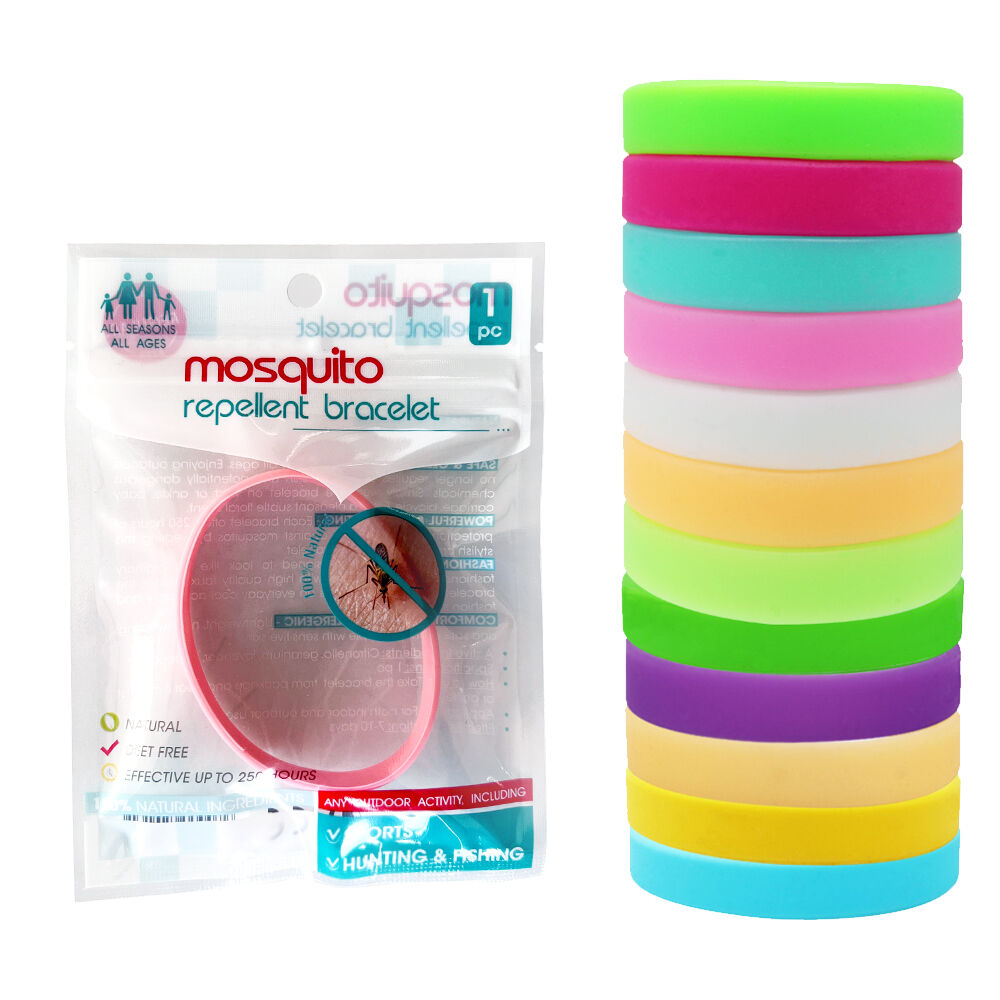
Actual Lifespan of a Mosquito Repellent Bracelet Under Real-World Use
Typical Effective Duration: 72–168 Hours Before Significant Efficacy Loss
Most mosquito repellent bracelets retain noticeable repellency for 72 to 168 hours (3–7 days) under typical use—but this window shrinks significantly in real-world conditions. Independent field tests consistently show that volatile active ingredients—primarily plant-based oils—evaporate rapidly, reducing concentration and efficacy each day. “Significant efficacy loss” is defined as the point where consistent mosquito deterrence fails; beyond 168 hours, residual repellent levels typically fall below the functional threshold. Manufacturer claims of longer wear often reflect idealized lab conditions, not heat, humidity, or physical wear encountered outdoors.
Key Degradation Factors: Heat, Sweat, UV Exposure, and Frequent Handling
Four primary factors accelerate degradation: elevated temperature increases evaporation rates; sweat dilutes surface repellent concentration and disrupts vapor dispersion; ultraviolet radiation degrades organic compounds like citronella and geraniol; and repeated handling abrades the silicone or fabric matrix, releasing active granules prematurely. Field data from high-heat regions shows up to a 50% reduction in effective lifespan compared with shaded or indoor use. Storing bracelets in cool, dry, dark conditions when not in use helps preserve potency—but cannot offset the inherent volatility of their active ingredients.
Why Mosquito Repellent Bracelets Offer Limited Protection Range
Localized Repellency: Effective Only Within 2–4 Inches of the Wrist
Mosquito repellent bracelets generate a protective vapor zone limited to 2–4 inches from the wrist—the diffusion radius of volatile oils like citronella and geraniol. This narrow barrier leaves ankles, necks, faces, and other high-bite zones fully exposed. Sweat, wind, and movement further destabilize the fragile vapor cloud, shrinking its effective reach during activity. Unlike EPA-registered topical repellents that coat skin and provide broad-spectrum coverage, bracelets lack the formulation or delivery mechanism to shield more than immediate wrist proximity.
No Body-Wide Coverage—Critical Gap for Mosquito Bite Prevention
This localized effect creates a clinically meaningful protection gap: ankles account for 42% of mosquito bites and necks for 26% during outdoor exposure. Without full-body defense, bracelets cannot mitigate risk in areas endemic for dengue, Zika, or West Nile virus. Real-world testing confirms wearables alone reduce bites by just 12–28%, versus 82% for DEET-based repellents. The CDC explicitly advises against relying on unregistered wearables for disease prevention—and recommends EPA-registered sprays or lotions for exposed skin instead.
Scientific Consensus and Regulatory Stance on Mosquito Repellent Bracelets
CDC and EPA Position: No Mosquito Repellent Bracelet Is Registered or Proven Effective
The U.S. Centers for Disease Control and Prevention (CDC) and Environmental Protection Agency (EPA) do not recognize any mosquito repellent bracelet as registered or scientifically validated for bite prevention. According to the CDC, only EPA-registered repellents containing DEET, picaridin, IR3535, or oil of lemon eucalyptus have undergone rigorous, standardized efficacy testing. Bracelets are commonly marketed as “fashion accessories” rather than pesticidal devices—exploiting a regulatory loophole that exempts them from mandatory performance verification. A 2023 study in the Journal of Pediatric Dermatology found that 64% of tested plant-based wristbands contained unlabeled synthetic synergists, yet none were required to demonstrate repellent effectiveness because they avoided explicit pesticidal claims.
Peer-Reviewed Evidence: 2022 UF Trial Shows Just 12% Bite Reduction vs. 82% for DEET
A controlled 2022 University of Florida trial directly compared a leading citronella-infused bracelet against a standard 20% DEET spray under identical outdoor conditions. The bracelet reduced mosquito landings by only 12%, while DEET achieved an 82% reduction. This peer-reviewed finding underscores a critical reality: even under optimal wear, wristbands deliver negligible protection beyond the immediate vicinity of the device. Their short-range, short-duration action cannot substitute for proven, body-wide repellent strategies—especially in high-risk settings. To date, no credible, independently replicated study has demonstrated that any unregistered wearable matches the protection level of EPA-registered repellents.
Active Ingredients in Mosquito Repellent Bracelets and Their Limitations
Mosquito repellent bracelets rely almost exclusively on volatile essential oils—including citronella, lemongrass, eucalyptus, lavender, and geraniol—or proprietary blends incorporating these compounds. Some formulations add stabilizers to slow evaporation, but all share a core limitation: rapid airborne dissipation. Unlike DEET—which binds to skin proteins and provides sustained release—essential oils volatilize quickly in ambient air. A citronella-infused bracelet may emit a detectable scent for only 3–5 days before falling below functional repellent thresholds. Crucially, even at peak concentration, protection remains confined to a 2–4 inch radius around the wrist. Arms, legs, torso, and head remain unprotected—not due to improper use, but by fundamental design constraints. This dual limitation—brief duration and minimal spatial coverage—means bracelets cannot deliver reliable, comprehensive mosquito bite prevention.
FAQ
How long does a mosquito repellent bracelet typically last?
Most mosquito repellent bracelets are effective for 3–7 days (72–168 hours) under normal conditions. However, their lifespan diminishes in high heat, humidity, or with frequent handling.
How do environmental factors impact the bracelet's effectiveness?
Heat accelerates evaporation, sweat dilutes the repellent, UV radiation degrades the active compounds, and frequent handling can release repellents prematurely, all contributing to decreased effectiveness.
What is the range of protection provided by mosquito repellent bracelets?
These bracelets offer protection within a 2–4 inch radius of the wrist. This narrow range leaves other parts of the body exposed to mosquito bites.
Are mosquito repellent bracelets as effective as DEET-based repellents?
No, studies show that bracelets reduce bites by only 12–28%, compared to 82% for DEET-based repellents. They cannot provide full-body protection.
Do the CDC and EPA recommend mosquito repellent bracelets?
No, neither organization recognizes any mosquito repellent bracelet as scientifically validated or effective. Only EPA-registered repellents have been tested for efficacy and safety.
Table of Contents
- Actual Lifespan of a Mosquito Repellent Bracelet Under Real-World Use
- Why Mosquito Repellent Bracelets Offer Limited Protection Range
- Scientific Consensus and Regulatory Stance on Mosquito Repellent Bracelets
- Active Ingredients in Mosquito Repellent Bracelets and Their Limitations
-
FAQ
- How long does a mosquito repellent bracelet typically last?
- How do environmental factors impact the bracelet's effectiveness?
- What is the range of protection provided by mosquito repellent bracelets?
- Are mosquito repellent bracelets as effective as DEET-based repellents?
- Do the CDC and EPA recommend mosquito repellent bracelets?