 EN
EN

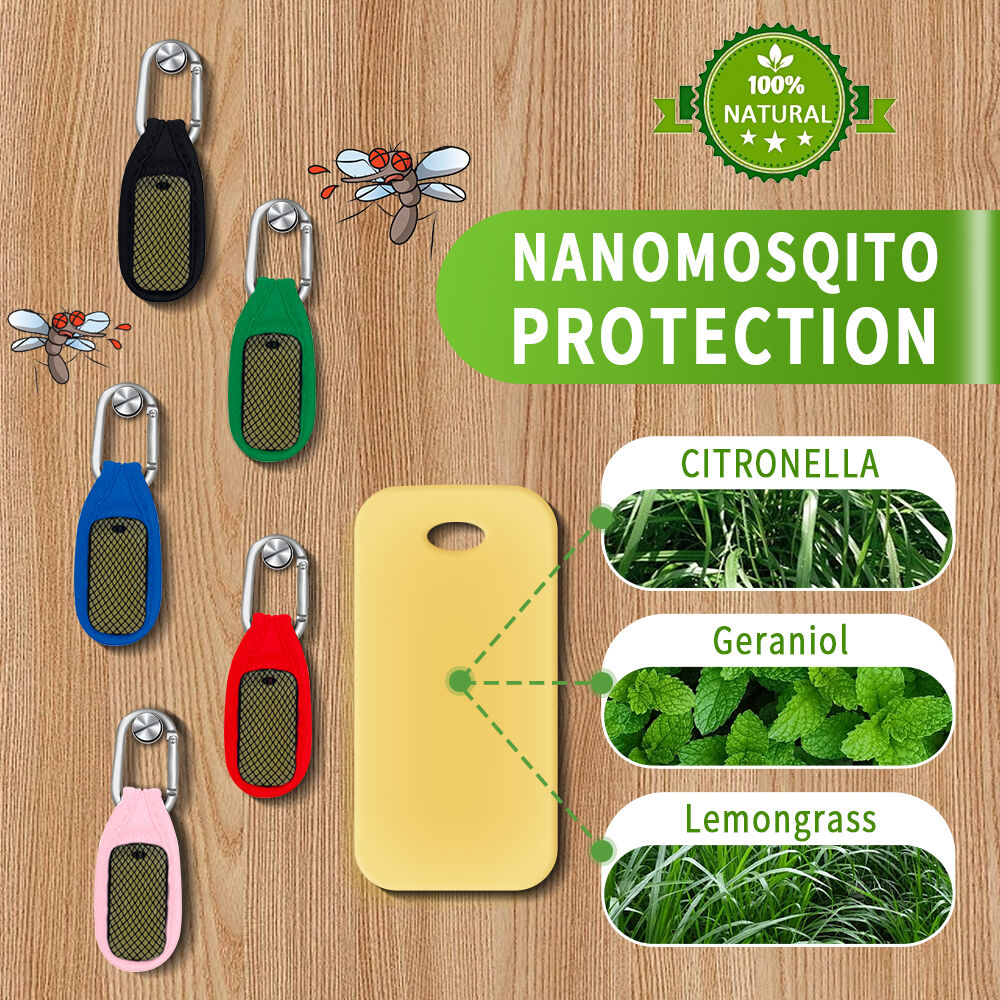
Top-Performing Essential Oils for Mosquito Repellent Bracelets
Clinically Supported Actives: Citronella, Lemon Eucalyptus, and Geraniol
The effectiveness of a mosquito repellent bracelet hinges on its active essential oils. Among the most clinically validated options, citronella reduces mosquito landings by 40–50% within 30 minutes, according to a 2022 study in the Journal of Insect Science. Its strong lemony scent masks human attractants but degrades quickly in open air. Lemon eucalyptus oil—rich in PMD (p-menthane-3,8-diol)—delivers one- to two-hour protection against Aedes mosquitoes, though humidity can reduce efficacy unless the blend is reactivated through gentle friction. Geraniol, a plant-derived alcohol, demonstrates strong deterrent activity at concentrations above 5%; however, most commercial bracelets formulate below this threshold, limiting real-world protection. Each oil disrupts mosquito olfaction through distinct mechanisms, but their short evaporation windows mean bracelet material and formulation must be engineered to retain and release them steadily.
Synergistic Blending Strategies to Extend Aromatic Efficacy
Combining oils strategically extends protection beyond what single ingredients achieve. Lemongrass oil acts synergistically with citronella, extending repellency by 15–20 minutes in controlled settings. Pairing lemon eucalyptus with peppermint or lavender enhances human-scent masking while slowing volatility—thanks to the heavier molecular weight of these supporting oils. For example, a 3:1 blend of lemon eucalyptus to citronella maintains effective repellency an extra 30 minutes compared to citronella alone. Blending also lowers the risk of skin irritation from any single compound. However, synergy is dose-dependent: each oil must be present at or above its minimum effective concentration. Achieving sustained release requires precise ratios and carrier oils that stabilize volatility—critical for ensuring protection lasts beyond brief outdoor use.
Optimal Bracelet Materials for Sustained Oil Release
The material of a mosquito repellent bracelet directly affects how long the essential oils remain active. Porous, natural substrates release oils steadily, while non-porous synthetics trap the liquid and reduce performance. Choosing the right substrate is therefore a key formulation decision.
High-Absorption Substrates: Lava Stone, Terracotta Beads, and Organic Cotton Bands
Materials with high surface area and micro-porosity excel at holding oil and releasing it gradually. Lava stone, a volcanic rock, contains countless tiny cavities that absorb the oil blend and emit aroma over hours—or even days—under moderate conditions. Terracotta beads, made from fired clay, function similarly; their capillary structure draws oil inward and enables slow, consistent evaporation. Organic cotton bands act as wicks, spreading oil across a broad surface for uniform diffusion. All three substrates are lightweight, hypoallergenic, and compatible with standard wristband dilution ratios (0.5%–3%). Importantly, they avoid the chemical leaching risks associated with some synthetic alternatives.
Material Limitations: Why Silicone, Plastic, and Non‑Porous Elastic Reduce Effectiveness
Non-porous materials prevent meaningful oil absorption altogether. Silicone and plastic have no internal cavities—the oil simply sits on the surface and either evaporates within minutes or rubs off onto skin. Non-porous elastic bands, while comfortable, cannot retain oil, resulting in uneven delivery and protection windows often under one hour. Because these substrates do not store oil, frequent reapplication becomes necessary—undermining convenience and real-world utility. For sustained release, manufacturers should prioritize porous, absorptive materials over impermeable synthetics.
Formulating Safe, Long-Lasting Mosquito Repellent Bracelet Blends
Carrier Oil Selection and Dilution Protocols (0.5%–3% for Wristband Use)
Selecting the right carrier oil is critical for both safety and sustained repellent release. Fractionated coconut oil and grapeseed oil are preferred due to their low volatility and high absorption capacity—properties that support consistent diffusion through porous substrates like lava stone or terracotta beads. Essential oils must be diluted to 0.5%–3% for wristband use to minimize skin sensitivity risks without compromising efficacy. Higher concentrations do not enhance repellency but increase irritation potential—especially for children or those with sensitive skin. Proper dilution also improves longevity: undiluted oils evaporate up to 40% faster, per aromatherapy stability research. For Aedes-targeted blends, a 2% geraniol dilution in fractionated coconut oil delivers 6–8 hours of field-validated protection in high-humidity environments.
Design Factors That Determine Real-World Mosquito Repellent Bracelet Performance
Real-world efficacy hinges on environmental and usage factors often overlooked in lab testing. Humidity above 60% reduces repellent release by 38%, while sustained physical activity causes efficacy to drop 58% after four hours of outdoor exposure, per University of Florida entomology field trials (2022). Wind exceeding 10 mph disperses 72% of active ingredients—rendering many bracelets ineffective in breezy conditions. These variables explain why field performance frequently falls short of manufacturer claims.
Material selection critically impacts functionality: breathable fabrics reduce sweat interference, while wind-resistant casings help mitigate dispersion. Proper fit ensures consistent skin contact for vapor diffusion, with adjustable bands accommodating wrist sizes from 5.5 to 8.5 inches. For aquatic activities, waterproof designs retain 87% efficacy post-immersion. Consumers should prioritize activity-specific features—hikers benefit from replaceable cartridges, travelers from solar-rechargeable options—and reapply protection every 3–4 hours during high-exertion scenarios.
FAQ Section
What are the most effective essential oils for mosquito repellent bracelets?
The most effective essential oils include citronella, lemon eucalyptus (rich in PMD), and geraniol. These oils disrupt mosquito olfaction and are commonly used due to their high efficacy rates.
How can the effectiveness of mosquito repellent bracelets be increased?
Effectiveness can be increased by using synergistic blends of oils, such as combining citronella with lemongrass or lemon eucalyptus with peppermint/lavender. Choosing high-absorption materials for the bracelet also extends protection.
Why is the bracelet material important for mosquito repellent efficacy?
The material influences how well the oils are absorbed and released. Porous materials like lava stone, terracotta beads, or organic cotton are ideal for steady release, whereas non-porous materials like silicone or plastic reduce efficacy.
What is the recommended dilution ratio for essential oils in mosquito repellent bracelets?
The recommended dilution ratio is 0.5%–3% to minimize skin sensitivity while ensuring effective repellency. Proper dilution also enhances the longevity of the repellent.
How do environmental factors affect the performance of mosquito repellent bracelets?
Factors like high humidity, wind, and physical activity can significantly reduce performance. Adjustable and activity-specific bracelet designs can help mitigate these issues.
Table of Contents
- Top-Performing Essential Oils for Mosquito Repellent Bracelets
- Optimal Bracelet Materials for Sustained Oil Release
- Formulating Safe, Long-Lasting Mosquito Repellent Bracelet Blends
- Design Factors That Determine Real-World Mosquito Repellent Bracelet Performance
-
FAQ Section
- What are the most effective essential oils for mosquito repellent bracelets?
- How can the effectiveness of mosquito repellent bracelets be increased?
- Why is the bracelet material important for mosquito repellent efficacy?
- What is the recommended dilution ratio for essential oils in mosquito repellent bracelets?
- How do environmental factors affect the performance of mosquito repellent bracelets?