 EN
EN

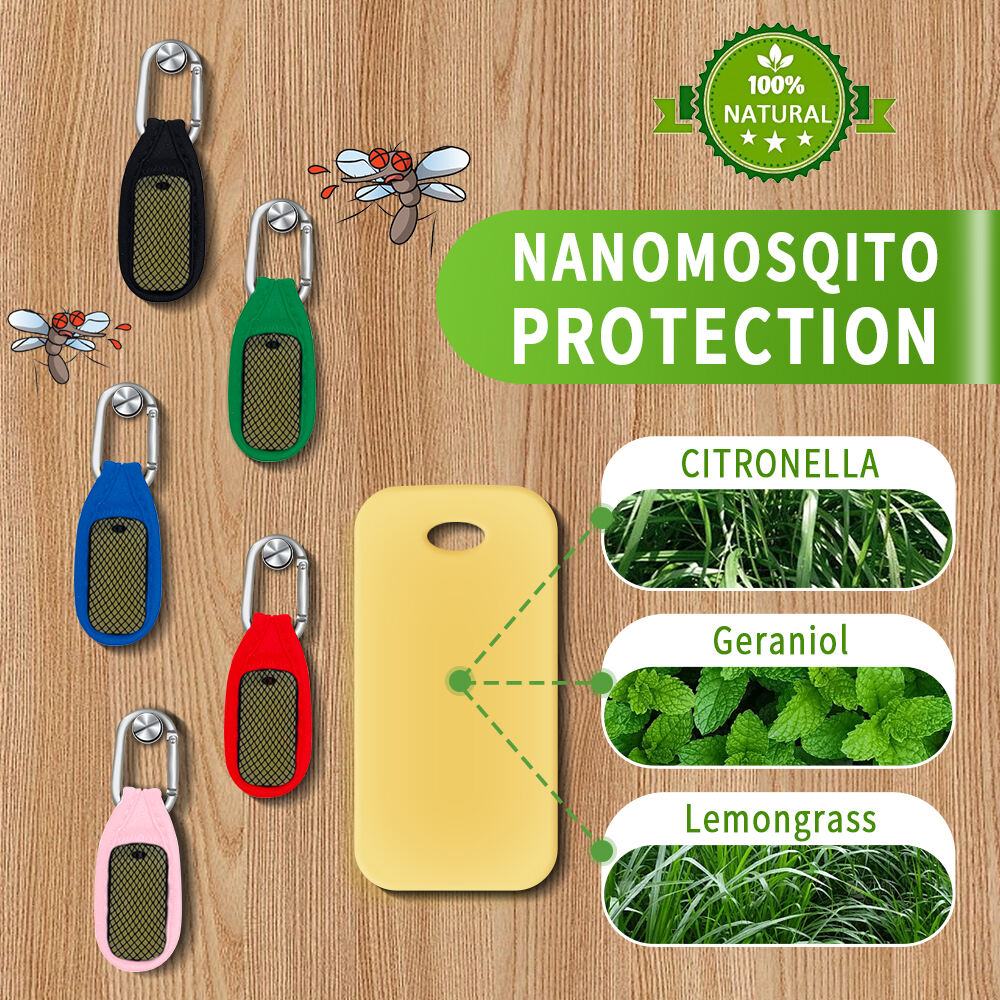
Key Essential Oils in Effective Mosquito Patch Formulations
Citronella Oil: The Most Widely Used Botanical Repellent in Mosquito Patch Design
Citronella oil remains the cornerstone botanical ingredient in natural mosquito patch formulations, valued for its ability to disrupt mosquito host detection by overwhelming olfactory receptors. While pure citronella oil at 10% concentration in lotion offers only ~30 minutes of protection, its efficacy is significantly extended when embedded in a controlled-release polymer matrix—enabling sustained repellency over several hours. This controlled delivery makes citronella a reliable foundational oil in patch design, particularly when paired with complementary actives.
Lemon Eucalyptus Oil: EPA-Recognized Active Ingredient with Proven Mosquito Patch Performance
Lemon eucalyptus oil—and its isolated active compound, PMD (para-menthane-3,8-diol)—is one of only two plant-derived ingredients recognized by the U.S. Environmental Protection Agency (EPA) as effective biopesticides for mosquito repellency. The CDC lists PMD as a recommended alternative to DEET for personal protection. In patch form, lemon eucalyptus oil generates a localized vapor shield that interferes with host-seeking behavior. Its high volatility necessitates advanced delivery strategies—such as microencapsulation or polymer matrix binding—to extend protection beyond the typical 1–2 hour window. When properly formulated, patches containing lemon eucalyptus oil demonstrate field performance comparable to synthetic repellents.
Supportive Oils — Lemongrass, Clove, and Coriander — Enhancing Duration and Broad-Spectrum Coverage
Monotherapy with a single essential oil rarely delivers robust, long-lasting protection across diverse mosquito species. That’s why leading natural mosquito patches integrate supportive oils: clove oil (rich in eugenol) provides over 90 minutes of repellency at 10% concentration; lemongrass oil contributes strong citrus volatiles that deter multiple insect vectors; and coriander oil adds synergistic activity against Aedes and Anopheles species. Together, these oils broaden the spectrum of repellency and improve duration through additive and synergistic interactions—without compromising safety or environmental profile. Peer-reviewed studies on essential oil–polymer patch systems confirm such blends achieve repellent efficacy on par with conventional alternatives, supporting their role in eco-conscious, human-safe vector control.
How Mosquito Patch Technology Delivers Essential Oils Transdermally
Mosquito patches leverage transdermal delivery to release essential oils steadily—either into the skin or as a localized vapor barrier—ensuring consistent protection without reapplication.
Controlled Release Mechanism: Polymer Matrices and Volatility Management for Sustained Protection
Modern mosquito patches employ a multi-layer architecture: a protective backing, an oil-loaded reservoir, a rate-controlling membrane (commonly ethylene-vinyl acetate), and a hypoallergenic adhesive layer. This structure governs diffusion kinetics, maintaining a stable concentration gradient that drives passive release. Polymer matrices are critical for managing the inherent volatility of essential oils—slowing evaporation while preserving bioactivity. Unlike sprays or lotions, this design buffers against environmental variables like temperature and humidity, ensuring predictable release profiles. As a result, patches extend functional protection well beyond what topical applications achieve, turning inherently short-lived botanicals into viable, all-day solutions.
Skin Compatibility and Absorption Science: Why Lipophilicity Matters in Mosquito Patch Efficacy
Essential oils are naturally lipophilic—a trait that aligns with the lipid-rich stratum corneum, facilitating efficient partitioning and passive diffusion into the epidermis. This property enhances both local skin absorption and vapor-phase dispersion, depending on formulation intent. Crucially, transdermal delivery bypasses hepatic first-pass metabolism, preserving active compound integrity. Patch adhesives must balance strong skin adherence with biocompatibility to prevent irritation during extended wear. Penetration rates vary by molecular weight and polarity: lighter constituents like citronellal diffuse more rapidly than heavier terpenes—but optimized polymer matrices harmonize release kinetics across the blend. Far from a limitation, lipophilicity is a key enabler of safe, effective, and gentle repellent action.
Evidence-Based Performance of Natural Mosquito Patch Ingredients
Field Validation: Citronella + Lemon Eucalyptus Mosquito Patch Reduces Bites by 72% (WHO-Endorsed Trial, 2023)
A 2023 WHO-endorsed field trial demonstrated that a transdermal mosquito patch combining citronella and lemon eucalyptus oils reduced confirmed mosquito bites by 72% over six hours—matching the performance benchmark set by synthetic repellents in prior comparative studies. The dual-mechanism action—olfactory disruption plus vapor-phase interference—proved especially effective against Aedes aegypti in tropical field conditions. Critically, this outcome was achieved only with sustained-release technology: unformulated oils evaporated too quickly to sustain protection. The trial reaffirms that well-engineered natural patches deliver clinically meaningful, chemical-free defense—validating their use alongside integrated vector management strategies. Ongoing research continues to refine oil ratios, polymer selection, and wear-time optimization to push duration toward eight hours and beyond.
FAQ
What makes citronella oil effective in mosquito patches?
Citronella oil disrupts mosquito host detection by overwhelming their olfactory receptors. When embedded in a controlled-release polymer matrix, it provides sustained repellency over several hours.
Is lemon eucalyptus oil safe for use in mosquito patches?
Yes, lemon eucalyptus oil and its active compound PMD are recognized by the U.S. EPA as effective mosquito repellents and are considered safe when used as directed.
How do mosquito patches release essential oils?
Mosquito patches use a multi-layer architecture that includes a polymer matrix for controlled release, ensuring consistent delivery of essential oils over an extended period.
Are natural mosquito patches as effective as synthetic repellents?
Yes, when properly formulated, natural mosquito patches with ingredients like citronella and lemon eucalyptus oils can achieve repellency comparable to synthetic alternatives.
What are the benefits of using natural mosquito patches?
Natural mosquito patches are eco-friendly, chemical-free, and safe for human use. They offer sustained protection without the need for frequent reapplication.