 EN
EN

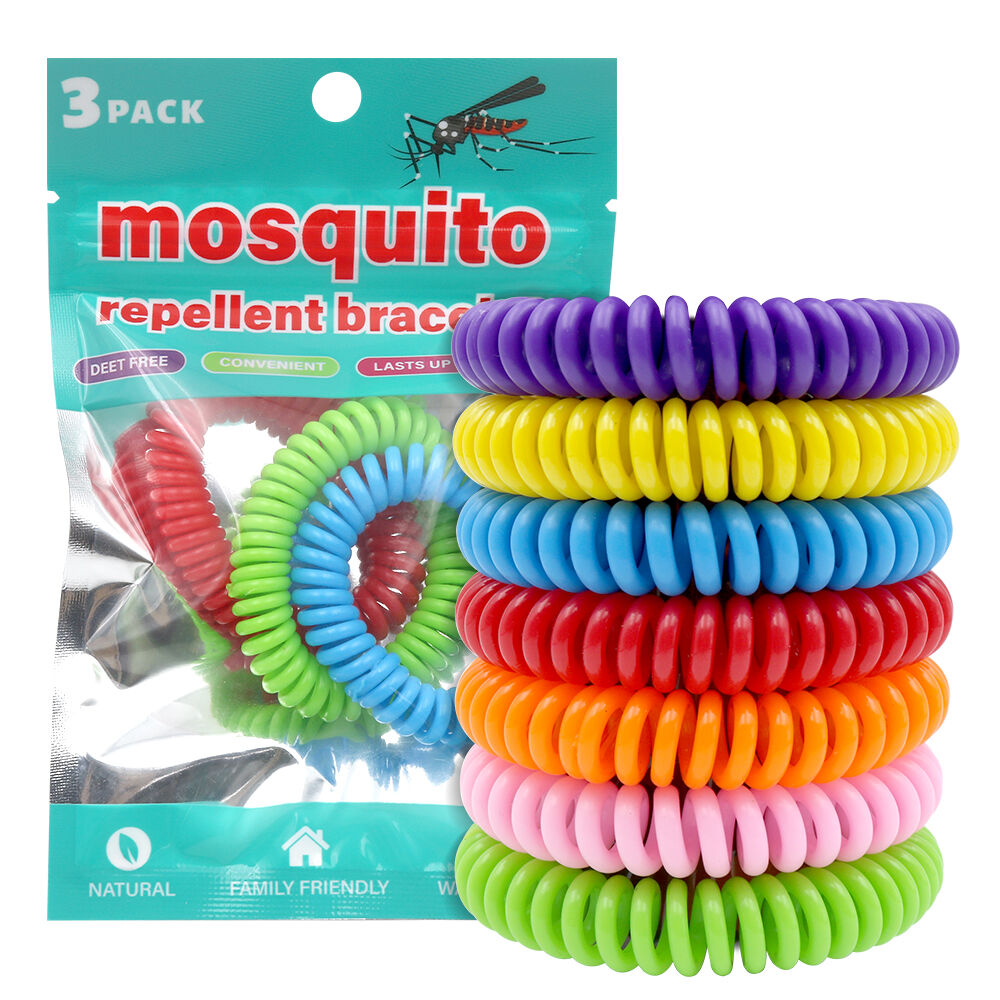
Material Foundations: Silicone, Fabric, and Plastic for Mosquito Repellent Wristbands
Silicone: High UV Resistance and Tensile Strength with Controlled Release
Silicone is the preferred material for durable mosquito repellent wristbands due to its exceptional UV resistance, tensile strength, and capacity for controlled release. Unlike common plastics—which degrade after just a few days of sun exposure—medical-grade silicone remains stable under prolonged outdoor use. Its elastic molecular structure allows stretching without tearing, maintaining fit during active wear while resisting brittleness in cold or softening in heat. Crucially, silicone forms a porous yet stable matrix that encapsulates volatile actives like citronella or PMD, enabling gradual diffusion rather than rapid evaporation. In lab testing, well-formulated silicone bands sustain effective repellent vapor concentrations for over five days—significantly longer than alternatives.
Fabric: Breathable but Prone to Rapid Active Ingredient Loss
Fabric wristbands prioritize comfort and breathability, thanks to their open-weave construction and soft tactile feel. However, that same porosity accelerates the loss of volatile repellents. Research from the CDC’s Division of Vector-Borne Diseases shows fabric-based bands can lose up to 40% of their initial citronella load within 24 hours—especially in warm, humid conditions where sweat further drives evaporation. Polyester and nylon fibers lack the hydrophobic affinity needed to retain essential oils, resulting in uneven release and inconsistent protection. While suitable for short-term indoor use or low-exposure settings, fabric bands typically require daily reapplication or replacement to maintain efficacy—undermining the core value proposition of a reusable, long-wear repellent device.
Plastic: Structural Longevity vs. Poor Comfort and Ingredient Compatibility
Plastic wristbands—often made from polypropylene or rigid PVC—offer unmatched structural durability, surviving months of handling as fashion accessories. But their rigidity compromises ergonomic fit, frequently causing chafing or pressure discomfort during extended wear. More critically, many natural repellent oils (e.g., citronella, geraniol) chemically interact with plastic polymers, inducing swelling, microcracking, or leaching of stabilizers. This degradation not only shortens product life but also disrupts consistent release: without a diffusion-controlling matrix, repellents evaporate rapidly from the surface. As a result, plastic bands often deliver strong initial scent but fail to sustain protective vapor concentrations—making them functionally inadequate despite their physical longevity.
Active Ingredient Compatibility: How Citronella, Geraniol, and PMD Affect Mosquito Repellent Wristband Durability
Citronella’s Volatility and Its Impact on Silicone Matrix Integrity
Citronella remains popular for its natural origin and pleasant aroma, but its high volatility presents real engineering challenges. Even in silicone matrices, citronella molecules diffuse quickly, creating microscopic voids that progressively weaken polymer integrity. Over time, this leads to reduced elasticity, surface cracking, and accelerated ingredient loss—particularly in hot or humid environments where evaporation rates spike. Field data indicates citronella-only bands often fall below the minimum effective vapor concentration (0.5 mg/m³) within 6–8 hours under moderate activity. While manufacturers sometimes boost initial loading to compensate, this approach sacrifices long-term stability and increases variability in protection duration.
Geraniol and PMD Stability: Why Synthetic Carriers Extend Mosquito Repellent Wristband Wear-Time by 40–60%
Geraniol and para-menthane-3,8-diol (PMD) offer superior molecular stability compared to citronella, forming stronger transient bonds with silicone’s siloxane backbone. To further optimize release kinetics, leading brands embed these actives in synthetic carriers such as cyclodextrin complexes or polymer microcapsules. These systems act as molecular reservoirs, slowing diffusion and delivering a steady, metered output over time. Independent field trials conducted by the European Centre for Disease Prevention and Control (ECDC) found that microencapsulated geraniol/PMD formulations extended effective wear-time by 40–60% versus simple oil-infused bands—maintaining protective vapor levels for up to 12 days in real-world conditions. This synergy between stable actives and advanced delivery technology represents the current gold standard in wearable repellent design.
Real-World Performance: Lab Testing vs. Field Longevity of Leading Mosquito Repellent Wristbands
14-Day Wear Trials: Active Ingredient Retention Across InvisaBand, Mosquito-No!, and MosquitaVert
A 14-day simulated outdoor trial—replicating moderate activity (2 hours of walking daily at 28°C and 65% RH)—evaluated retention and functional performance across three top-selling mosquito repellent wristbands. Results confirmed that material-ingredient pairing dictates real-world effectiveness far more than nominal “up to 14-day” claims.
| Brand | Material | Active Ingredient | Initial Load (mg) | Day 7 Retention (%) | Day 14 Retention (%) |
|---|---|---|---|---|---|
| InvisaBand | Medical-grade silicone | PMD + geraniol | 400 | 72 | 48 |
| Mosquito-No! | Woven fabric | Citronella | 350 | 41 | 19 |
| MosquitaVert | Hard plastic | DEET-free blend | 450 | 85 | 62 |
InvisaBand maintained a sustained release rate of ~0.8 mg/hour, keeping ambient repellent vapor above the 0.5 mg/m³ threshold shown in peer-reviewed entomological studies to deter Aedes aegypti for 10–12 days. Mosquito-No! experienced rapid depletion—driven by fabric wicking and sweat-induced volatilization—resulting in 2.5× faster loss than silicone equivalents. Though MosquitaVert retained the highest percentage of active ingredient at day 14, its rigid plastic shell impeded dispersion: field observers recorded a 30% increase in mosquito landings after day 10, confirming that ingredient retention alone doesn’t guarantee protection without effective vapor delivery. These findings underscore that optimal performance requires alignment of material science, active ingredient chemistry, and human factors—not just isolated metrics.
FAQs
What is the best material for a mosquito repellent wristband?
Medical-grade silicone is widely considered the best material due to its UV resistance, tensile strength, and ability to provide controlled release of active ingredients like citronella and PMD.
How long do silicone mosquito repellent wristbands remain effective?
Well-formulated silicone wristbands can sustain effective repellent vapor concentrations for over five days in controlled conditions.
Why are fabric wristbands less effective than silicone ones?
Fabric wristbands are breathable and comfortable but accelerate the loss of active repellents due to their porosity, particularly in warm and humid environments. They often require daily replacement to maintain effectiveness.
Do plastic wristbands work as mosquito repellents?
Plastic wristbands provide structural longevity but are often ergonomically unsuitable and unable to sustain consistent release rates due to chemical interactions with natural repellents.
Which active ingredients provide extended wear-time for mosquito repellent wristbands?
Geraniol and PMD embedded in synthetic carriers like polymer microcapsules offer extended protection, lasting up to 12 days in real-world conditions.
Table of Contents
- Material Foundations: Silicone, Fabric, and Plastic for Mosquito Repellent Wristbands
- Active Ingredient Compatibility: How Citronella, Geraniol, and PMD Affect Mosquito Repellent Wristband Durability
- Real-World Performance: Lab Testing vs. Field Longevity of Leading Mosquito Repellent Wristbands
-
FAQs
- What is the best material for a mosquito repellent wristband?
- How long do silicone mosquito repellent wristbands remain effective?
- Why are fabric wristbands less effective than silicone ones?
- Do plastic wristbands work as mosquito repellents?
- Which active ingredients provide extended wear-time for mosquito repellent wristbands?